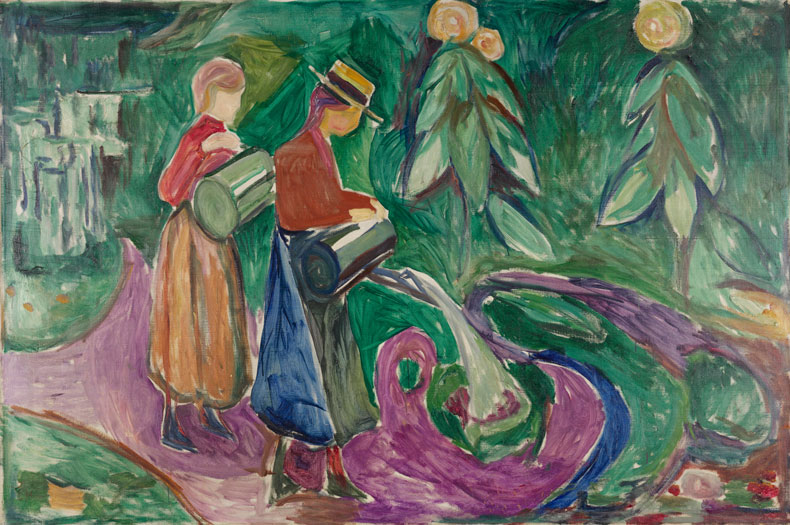
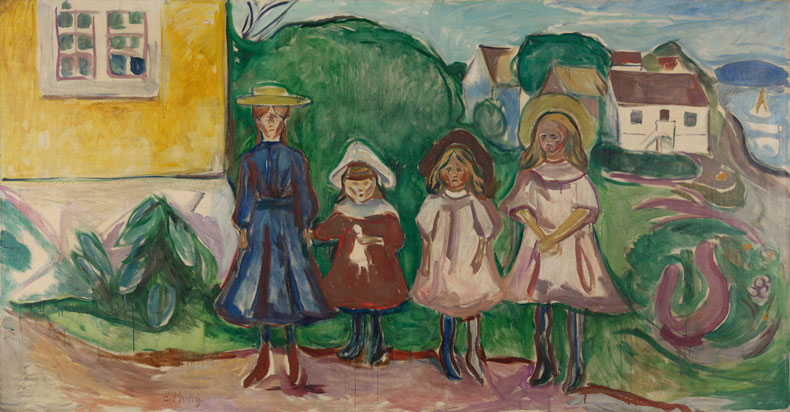
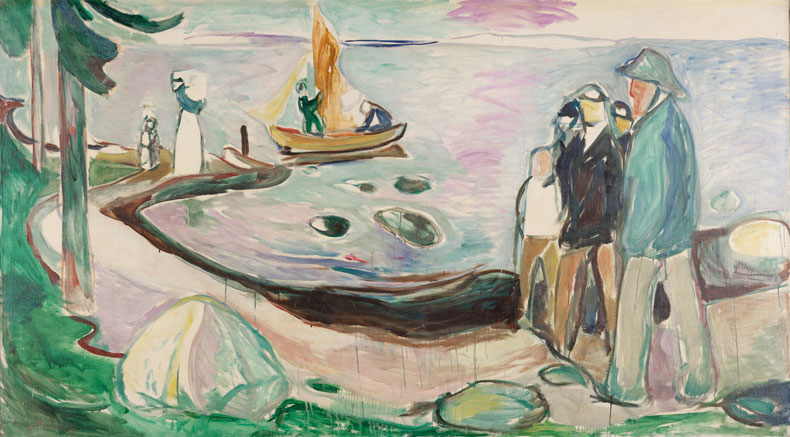
In the early 1920s Johan Throne Holst, founder of the Freia chocolate factory in Oslo, hit upon a bright idea. Believing that a happy workforce is a productive workforce, and having already established a welfare system for factory workers that included a laundry service and regular manicures, he decided to decorate the women’s canteen with first-rate art. He commissioned Edvard Munch, who was at the time (as now) the most famous Norwegian artist, to create a series of 12 large paintings for the canteen walls, which have remained in the factory ever since. Although Munch is not generally known for his sunniness, the work he turned in is among the most colourful and optimistic he ever made. Girls Watering Flowers, the fourth painting in the frieze, is a prime example: we can’t make out the gardeners’ facial expressions but their bright clothing, the ample flow of water and the rude health of the plants is plain to see. Now all 12 paintings have been temporarily transplanted to the Munchmuseet to allow the public to appreciate them up close (21 May–11 October).
Find out more from the Munchmuseet’s website.
Preview below | View Apollo’s Art Diary